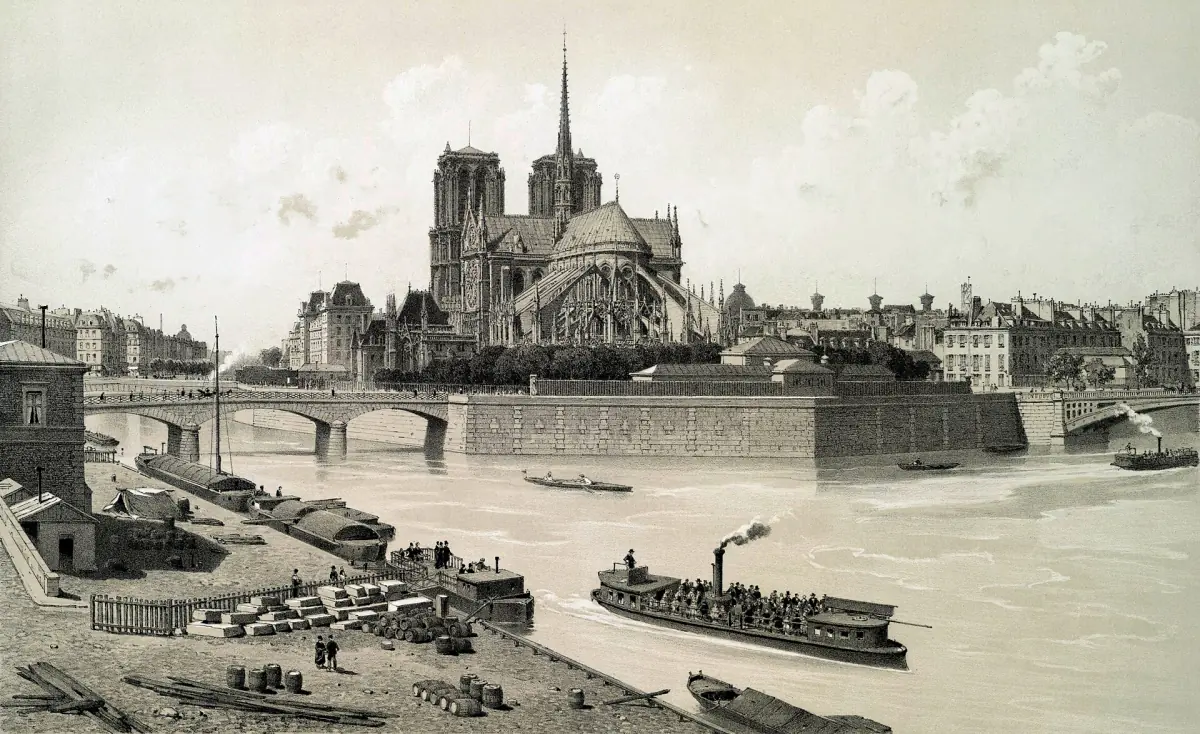
Notre-Dame in short
Tradition dates the laying of the foundation stone to 1163, under Bishop Maurice de Sully. Tradition also says that Pope Alexander III was present, but that detail goes back to a later tradition and is not certain. The conventional end of the medieval building phase is 1345. That is not the end of the changes, because the cathedral was altered in every century that followed.
This guide is independent. It gives the main points in order and links to the pages for the visit itself, such as the architecture page and the crypt page.
Timeline
The main dates.
| Year | Event |
|---|---|
| 1163 | Traditional foundation stone, on the initiative of Bishop Maurice de Sully |
| 1220–1260 | The three rose windows are dated to about 1220 (west), 1250 (north) and about 1260 (south) |
| 1345 | Conventional end of the medieval building phase |
| 1686 | The bell Emmanuel is hung |
| 1790s | Revolution: statues removed and altars destroyed |
| 2 December 1804 | Napoleon's coronation |
| 1831 | Victor Hugo's novel Notre-Dame de Paris appears |
| From 1844 | Restoration under Lassus and Viollet-le-Duc |
| 2013 | The bell Marie is hung |
| 15 April 2019 | Fire |
| 7 December 2024 | Reopening ceremony |
The rose window dates are the figures given in the cathedral's own teaching dossier. Not every window is only medieval glass.
Notre-Dame tours and Paris day trips
Guided visits, Seine cruises and city tours near the cathedral, with live prices and availability.
From the Middle Ages to the Revolution
Building, bells and loss.
A long building phase
Work began in 1163 and the medieval phase is conventionally closed with 1345. The Gothic plan has a nave, a transept and a choir, and flying buttresses take the sideways push of the vaults. That lets the walls carry larger windows. See the architecture page.
The west façade
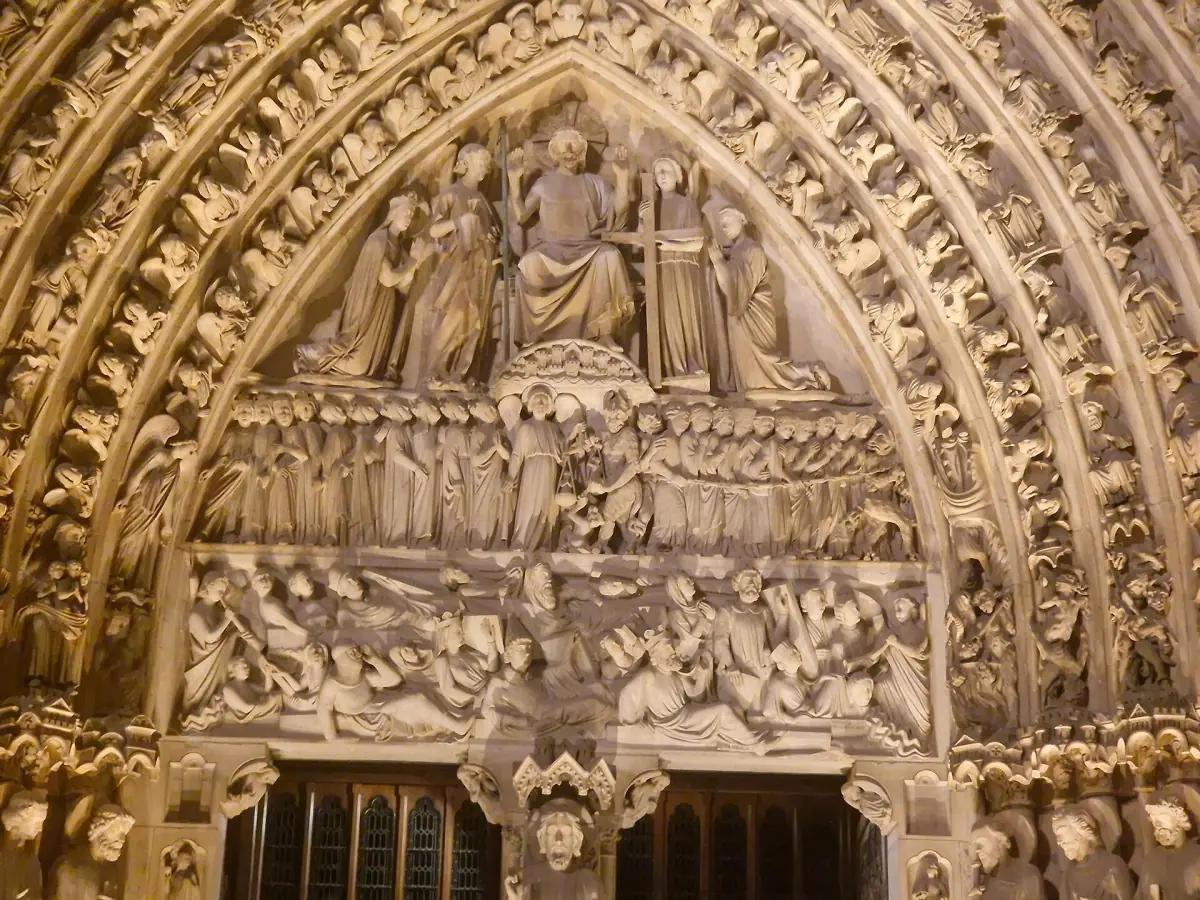
The three portals of the west front are, from left to right, the portal of the Virgin, the portal of the Last Judgement and the portal of Saint Anne.
The Revolution
During the Revolution the figures of the Gallery of Kings were taken down and beheaded. The treasure was looted and altars were destroyed. For a time the building served as a Temple of Reason.
Emmanuel and Marie
The great bell Emmanuel has hung in the tower since 1686. The bell Marie dates from 2013. They weigh 13.3 and 6.2 tonnes. The towers page says how to get close to them.
From Napoleon to Viollet-le-Duc
The nineteenth century gave Notre-Dame much of its look today.
The coronation of 1804
Napoleon was crowned emperor in Notre-Dame on 2 December 1804, in the presence of Pope Pius VII. This was not the traditional coronation cathedral of the French kings. That was Reims.
Victor Hugo
Hugo's novel Notre-Dame de Paris appeared in 1831. It belongs to a wave of renewed interest in the Middle Ages and in the care of old monuments.
Lassus and Viollet-le-Duc
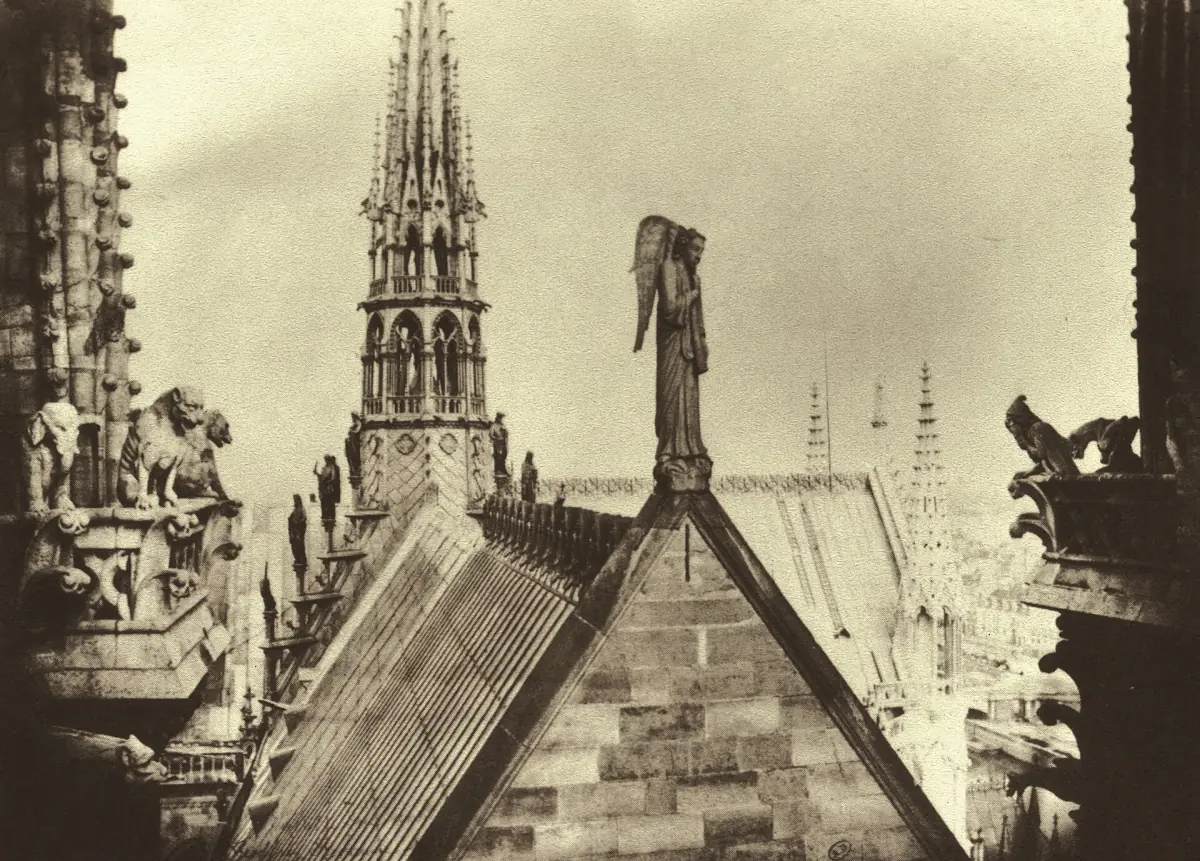
From 1844 the architects Lassus and Viollet-le-Duc restored the cathedral. They reworked the sculpture, the spire, the roof, the belfries, the gargoyles and the chimeras. Not everything you see is unchanged medieval work. A photo from 1865 shows the new spire designed by Viollet-le-Duc.
Gargoyles and chimeras
Gargoyles carry water off the roof. Chimeras are decorative figures. Many of both were renewed in the nineteenth-century project, which is why they are not all medieval. You can see them from the tower route.
The fire and the reopening
The most recent chapter.
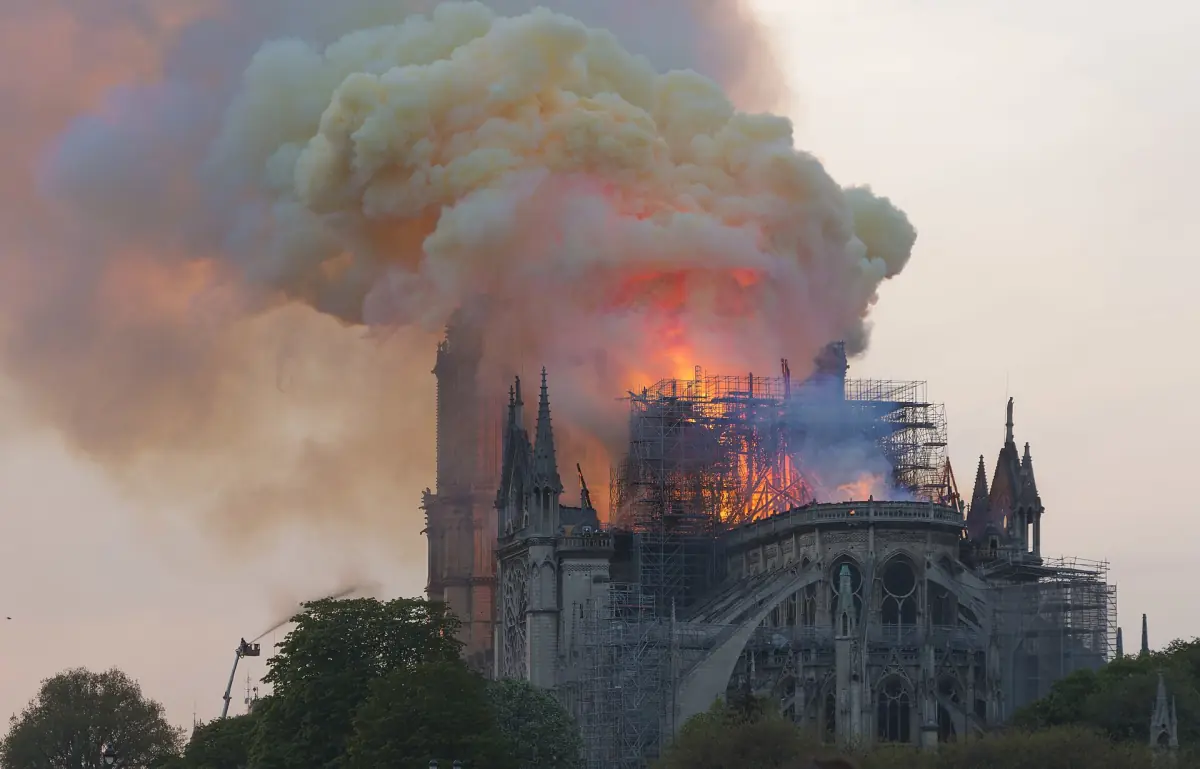
On the evening of 15 April 2019 a fire destroyed the roof and brought down the crossing tower. The two west towers were saved. The cathedral reopened with a ceremony on 7 December 2024, and the tower route followed on 20 September 2025. The details are on the fire page and the restoration page.
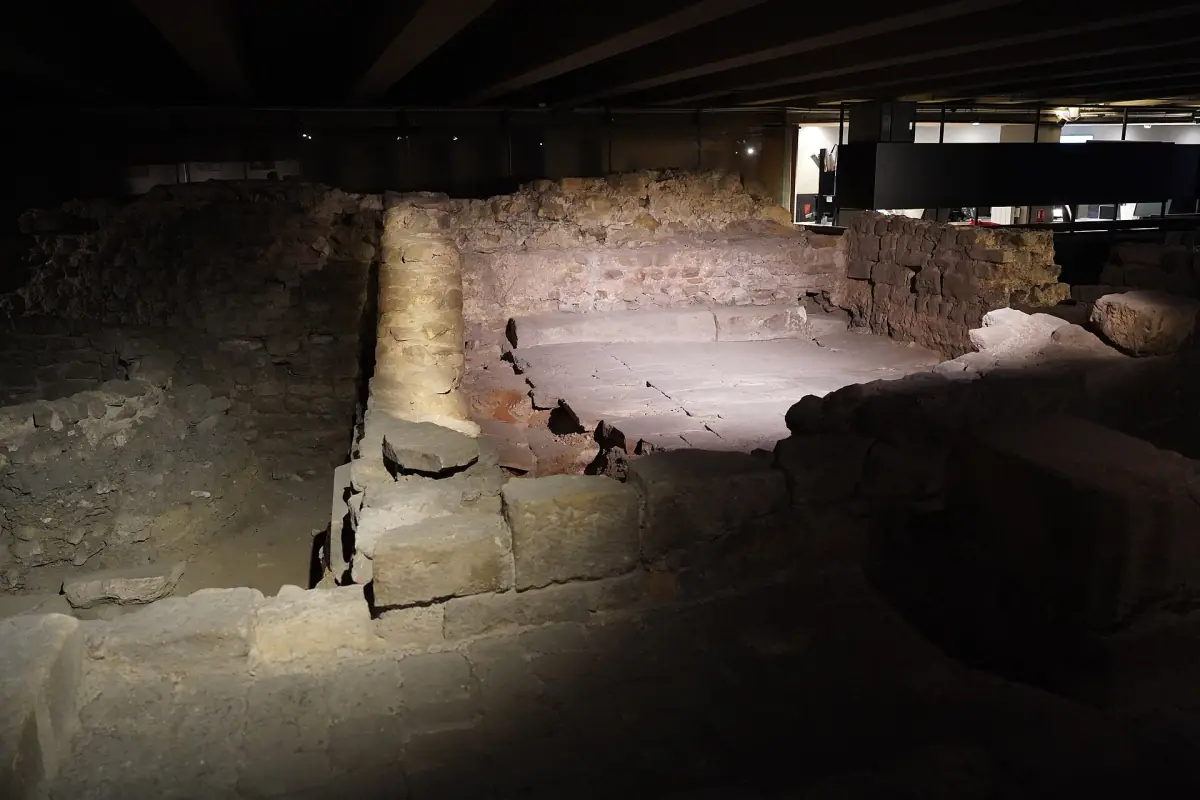
Beneath the forecourt lie the remains of ancient and medieval houses, which you can visit in the archaeological crypt. It is a separate museum of the city of Paris, not a part of the cathedral visit. See the crypt page.
If you also plan a museum day, the Louvre is a separate visit with its own tickets. Its guide is at Louvre Museum.
What to look for in the stone
History you can see on a visit.
Three rose windows
The cathedral has three large rose windows: west, north and south. The teaching dossier gives the west rose a diameter of 9.60 m and about 1220 as its date. The north and south roses are 12.90 m across and date from 1250 and about 1260.
Three portals
The west front has three portals: the portal of the Virgin on the left, the Last Judgement in the middle and Saint Anne on the right. The Last Judgement portal is the central one.
The nineteenth-century layer
The spire, parts of the sculpture and many gargoyles and chimeras belong to the restoration that began in 1844. Medieval and nineteenth-century work stand side by side.
Notre-Dame history: frequently asked questions
When was Notre-Dame built?
Tradition dates the foundation stone to 1163, under Bishop Maurice de Sully. The medieval building phase is conventionally ended with 1345, but the cathedral kept changing afterwards.
Who was crowned in Notre-Dame?
Napoleon was crowned emperor there on 2 December 1804, with Pope Pius VII present. Reims, not Notre-Dame, was the traditional coronation cathedral of the French kings.
What did Victor Hugo have to do with Notre-Dame?
His novel Notre-Dame de Paris appeared in 1831. It is part of the renewed interest in the Middle Ages and in the care of old monuments.
What did Viollet-le-Duc change?
From 1844 he and Lassus restored the cathedral, reworking the sculpture, spire, roof, belfries, gargoyles and chimeras. Not everything visible is unchanged medieval work.
What happened in the French Revolution?
The figures of the Gallery of Kings were taken down and beheaded, the treasure was looted and altars were destroyed. The building was for a time a Temple of Reason.
How old are the rose windows?
The cathedral's teaching dossier dates the west rose to about 1220, the north rose to 1250 and the south rose to about 1260. Not every window is only medieval glass.